
 English
 Pусский
 العربية
 中文
中文

Potencia de dron atado de 30 kilovatios
30 Kilowatt Tethered Drone Power System: Capabilities and Applications A 30-kilowatt (kW) tethered drone power system represents a high-performance solution for persistent aerial operations, combining robust energy delivery with extended flight endurance. Unlike battery-powered drones, which are limited by onboard energy storage, tethered systems provide continuous power via a physical cable, enabling uninterrupted flight for days or even weeks. This makes them ideal for missions requiring long-duration stability, high payload capacity, and reliable real-time data transmission. Technical Overview The 30 kW power rating indicates a substantial energy supply, capable of supporting heavy-duty drones with multirotor or hybrid designs. Key components include: - Tether Cable: A lightweight, high-strength cable that transmits power and data between the ground station and the drone. Advanced materials minimize weight while ensuring durability against environmental stressors like wind, UV exposure, and abrasion. - Ground Power Supply: A generator or grid-connected converter delivers regulated 30 kW power, often with redundancy to ensure operational continuity. - Drone Interface: The drone integrates high-efficiency power management systems to distribute energy to propulsion, avionics, and payloads without overheating or voltage drops. Performance Advantages 1. Unmatched Endurance: By drawing power from the ground, the drone avoids battery swaps, enabling 24/7 operation—critical for surveillance, communications relay, or scientific monitoring. 2. High Payload Capacity: The 30 kW output supports heavy payloads (e.g., high-resolution cameras, radar, or LiDAR) or additional subsystems like counter-drone jammers in defense scenarios. 3. Stability in Challenging Conditions: Tethered drones can maintain position even in high winds, as the tether provides mechanical stabilization and eliminates GPS-dependent hovering errors. Applications - Security & Surveillance: Persistent monitoring of borders, critical infrastructure, or large public events with real-time video feeds. - Disaster Response: Serving as temporary communication hubs or damage assessment platforms when terrestrial networks are disrupted. - Telecom Relay: Deploying rapidly to restore cellular or internet coverage in remote areas or during emergencies. - Scientific Research: Carrying atmospheric sensors or antennas for prolonged environmental or astronomical studies. Challenges and Mitigations - Tether Length Limitations: Operational altitude is constrained by cable length (typically 100–200 meters), though this suffices for many line-of-sight applications. - Logistics: Ground power units require fuel or grid access, but hybrid solar-generator systems can enhance mobility. - Safety: Redundant fail-safes, such as auto-landing protocols during tether breaches, mitigate risks. Conclusion A 30 kW tethered drone system bridges the gap between conventional drones and manned aircraft, offering unrivaled persistence and power for critical missions. Its versatility across defense, commercial, and humanitarian fields underscores its transformative potential in modern aerial operations. Future advancements may focus on autonomous tether management and higher voltage efficiency to further expand capabilities.
Producto
Categoría:
-
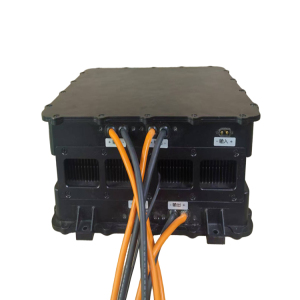
Fuente de alimentación para drones de 30W
Su clasificación: Fuente de alimentación para drones conectadosVistas: 59Número:Tiempo de liberación: 2025-11-06 17:47:39Energía aerotransportada 1. La fuente de alimentación a bordo reduce la corriente continua de alto voltaje de la caja de amarre a tierra a una salida estable de corriente continua de bajo voltaje adecuada para el suministro de energía de vehículos aéreos no tripulados (como 50 V para 12 S), proporcionando una fuente de alimentación estable de largo alcance para el vehículo aéreo no tripulado. 2. La fuente de alimentación integrada tiene múltiples mecanismos de seguridad, como protección contra sobretensión y subtensión de entrada, protección contra sobrecarga y protección contra sobr...
Noticias
Categoría:
¡Sin resultados de búsqueda!
Caso
Categoría:
¡Sin resultados de búsqueda!
Video
Categoría:
¡Sin resultados de búsqueda!
Descargar
Categoría:
¡Sin resultados de búsqueda!
Reclutamiento
Categoría:
¡Sin resultados de búsqueda!
Productos recomendados
-
NEWS
Fuente de alimentación para drones de 30W
Conozca más



 Whatsapp
 Teléfono